How Your Roof System Affects Energy Efficiency in Houston
How Your Roof System Affects Energy Efficiency in Houston
Houston homeowners pay some of the highest cooling costs in the country. The reason isn’t just the heat — it’s the combination of high humidity, intense solar load, and roofing systems that aren’t working with the climate. When we get on a Houston roof, we see the same energy problems repeatedly: inadequate attic ventilation, the wrong shingle color for the solar exposure, and soffit blockage that kills airflow entirely.
Attic Ventilation Is the First Problem
A properly ventilated attic in Houston should move air continuously — hot air out at the ridge, cooler air in at the soffits. When that system is compromised, attic temperatures can exceed 150 degrees on a summer afternoon. That heat radiates down into your living space and works your HVAC system harder than it should have to.
The most common causes we find: soffits blocked during insulation installation, ridge vents never fully opened during construction, and insulation blown over the top of soffit baffles. All fixable — some during a roof replacement, some as standalone repairs.
On every RCC roof replacement, we inspect the attic ventilation condition as part of the job scope. If your ventilation is inadequate, we document it and address it — because a new roof on a poorly ventilated attic will underperform regardless of material quality.
Shingle Color and Solar Reflectance
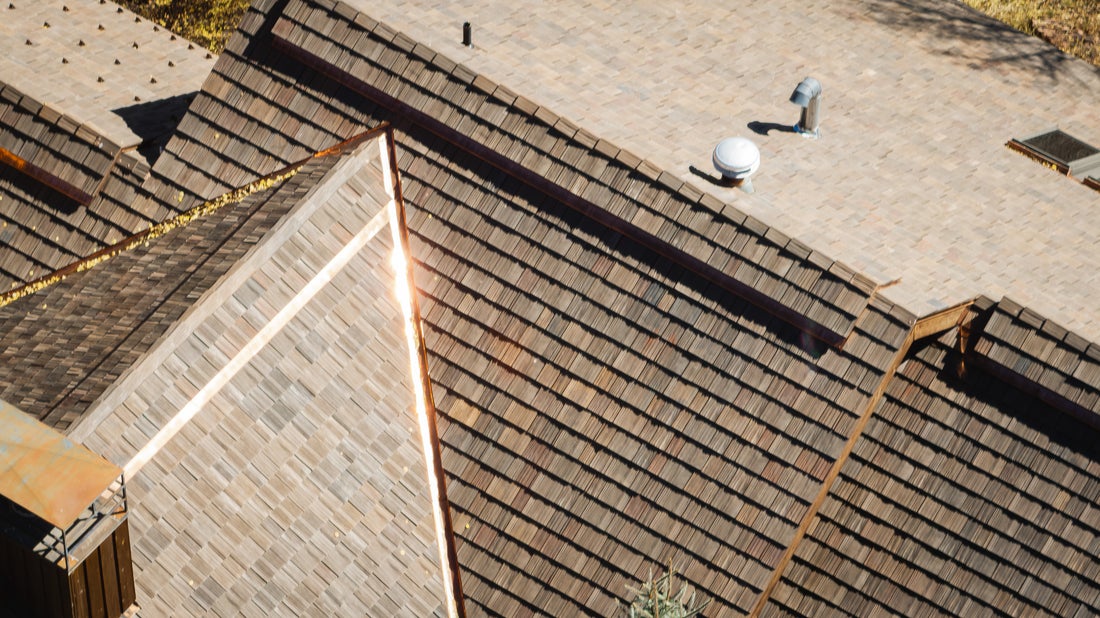
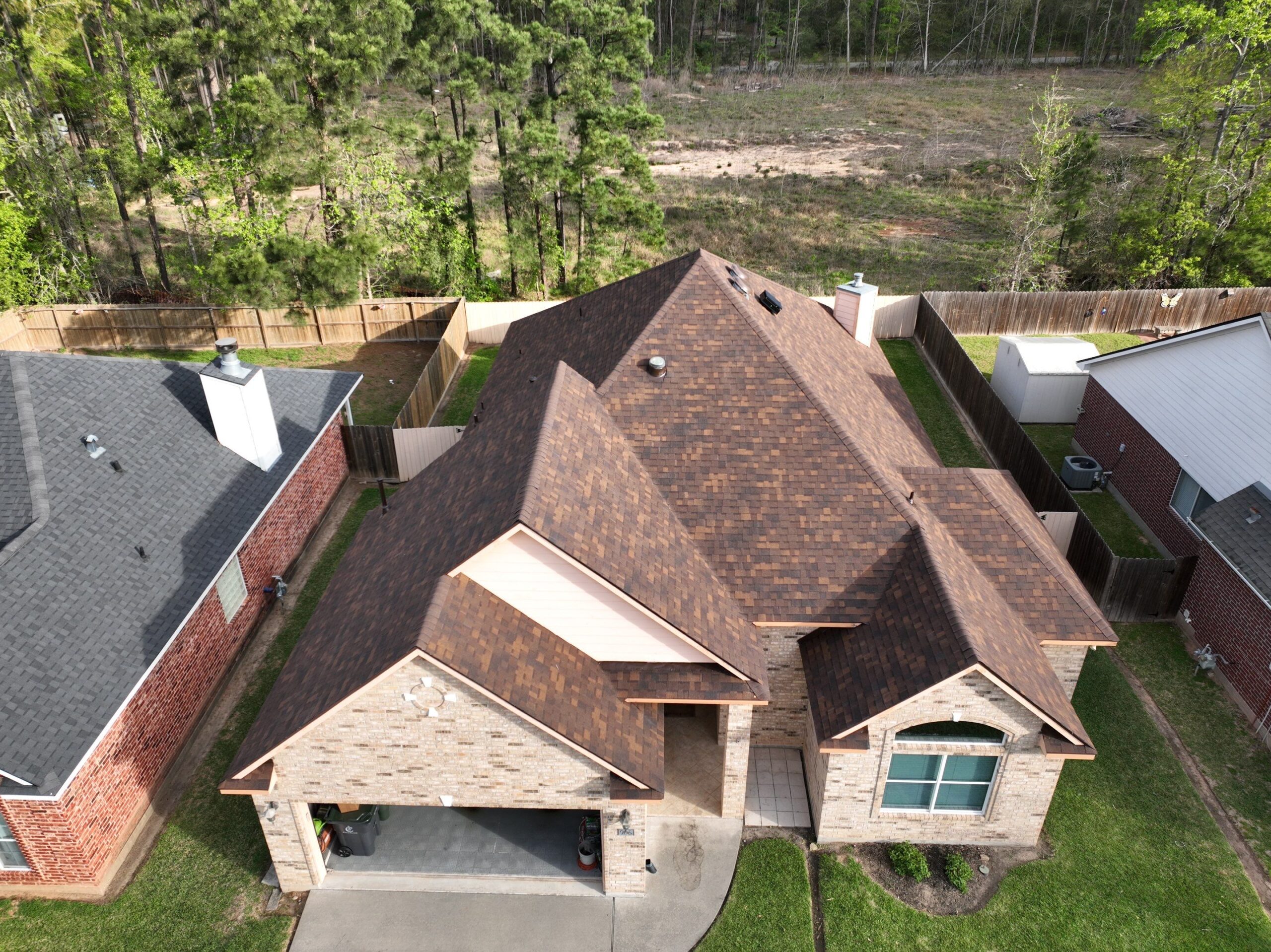
Dark shingles absorb significantly more solar energy than light-colored shingles. In Houston’s climate — where you’re cooling for 8 or 9 months of the year — shingle color is an energy decision, not just an aesthetic one. Owens Corning Duration, CertainTeed Landmark, and TAMKO Heritage all offer color options with varying solar reflectance values. South-facing primary slopes benefit most from lighter-colored or reflective shingles. An RCC consultation includes that conversation as part of material selection — not as an afterthought.
Drip Edge and Moisture Management
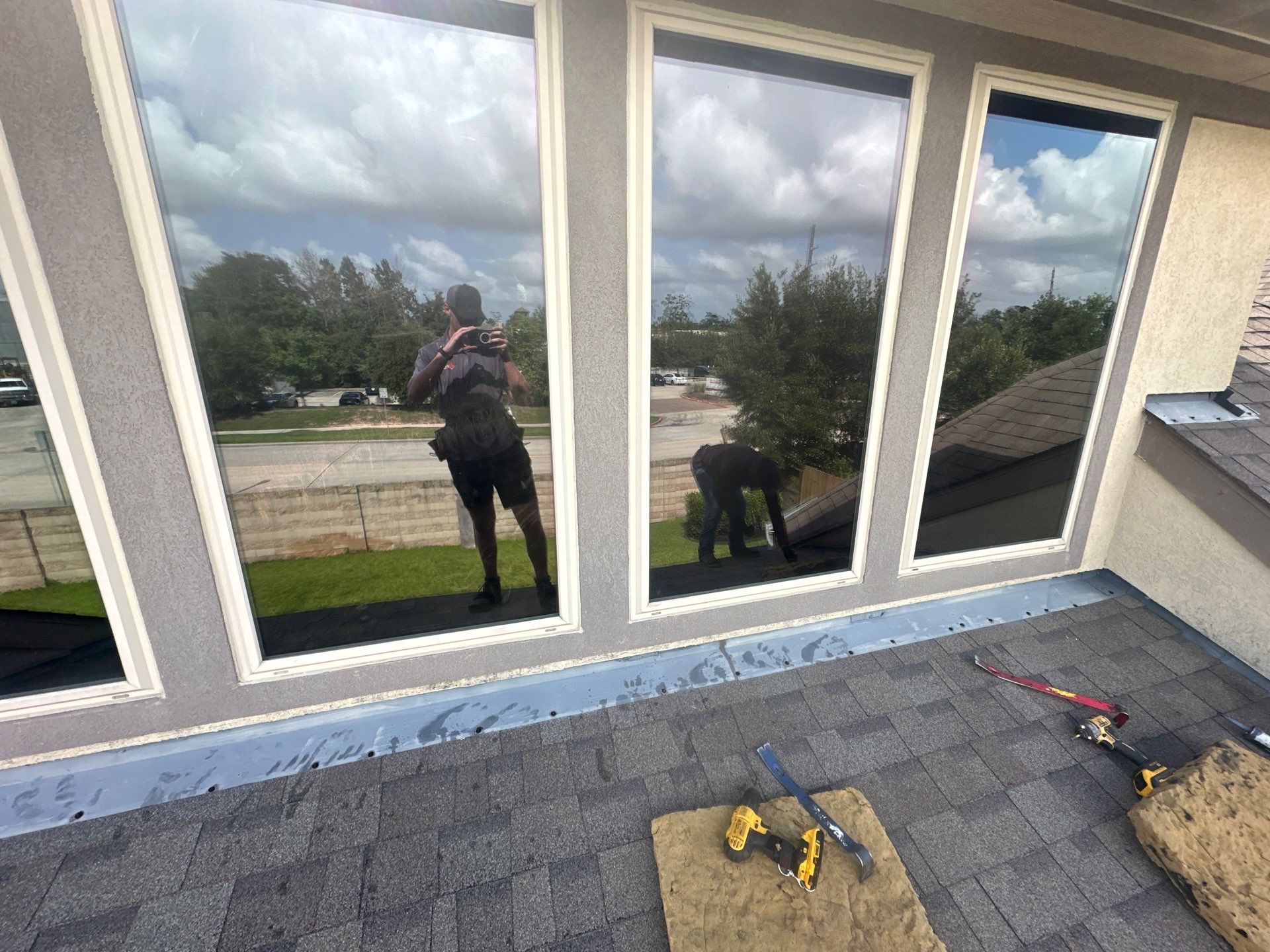
Moisture that gets behind the drip edge onto fascia boards creates entry points for humid outside air into wall cavities — increasing HVAC load and contributing to mold conditions inside wall assemblies. RCC installs 2×4 drip edge (the only profile that covers the full 2 inches of decking required by code) and detaches and resets gutters on every job, fastened to the fascia board rather than through the drip edge. That’s the detail that stops the moisture pathway causing fascia failure in Houston homes.
What to Ask During a Roof Inspection
Ask any inspector specifically about: soffit ventilation condition, ridge vent installation, attic insulation depth relative to soffits, and whether your current shingle color is appropriate for your roof’s orientation. A roofing company focused on long-term performance will answer these without prompting. One focused on closing a replacement job won’t bring them up.
RCC’s approach: maintenance first, repair second, replace only when that’s the right answer. If your roof has more life in it but your attic is undermining your energy bills, that’s a ventilation conversation — not a replacement. Schedule a free inspection here.