4 Roofing Details Houston Homeowners Need | Roof Concepts Construction
Quality Roofing Details for Houston Homes - Roof Concepts Construction
Every contractor in the Houston market will tell you they do quality work. Here are the specific, verifiable details that separate an installation that will perform for 20+ years from one that starts creating problems in 5.
Nail Placement and Method
RCC hand-nails every installation. Pneumatic nail guns set fasteners at whatever depth the gun is calibrated to — which may overdrive nails through the shingle mat or underdrive them leaving the head proud. Hand-nailing controls placement and depth on every fastener. On a 25-square roof, that’s thousands of fasteners placed correctly rather than approximately correctly.
Drip Edge Sizing
Most contractors in Houston use 1.5×1.5 or 2×2 drip edge — the cheapest option and the most common. The problem: once fascia is installed, neither profile covers the full 2 inches of decking required by code. Water running off the decking contacts the fascia rather than directing into the gutter. RCC uses 2×4 drip edge on every job. It costs more. It’s the right size.
Gutter Attachment Method
The standard Houston gutter installation fastens through the drip edge. Every installer does this because it’s faster. The result is a direct water pathway from the gutter mounting screw onto the fascia board. Over years of Houston rainfall, this is the mechanism causing fascia rot on thousands of homes in this market. RCC detaches and resets gutters on every full replacement — fastened to the fascia board, with the drip edge sealing the system correctly.
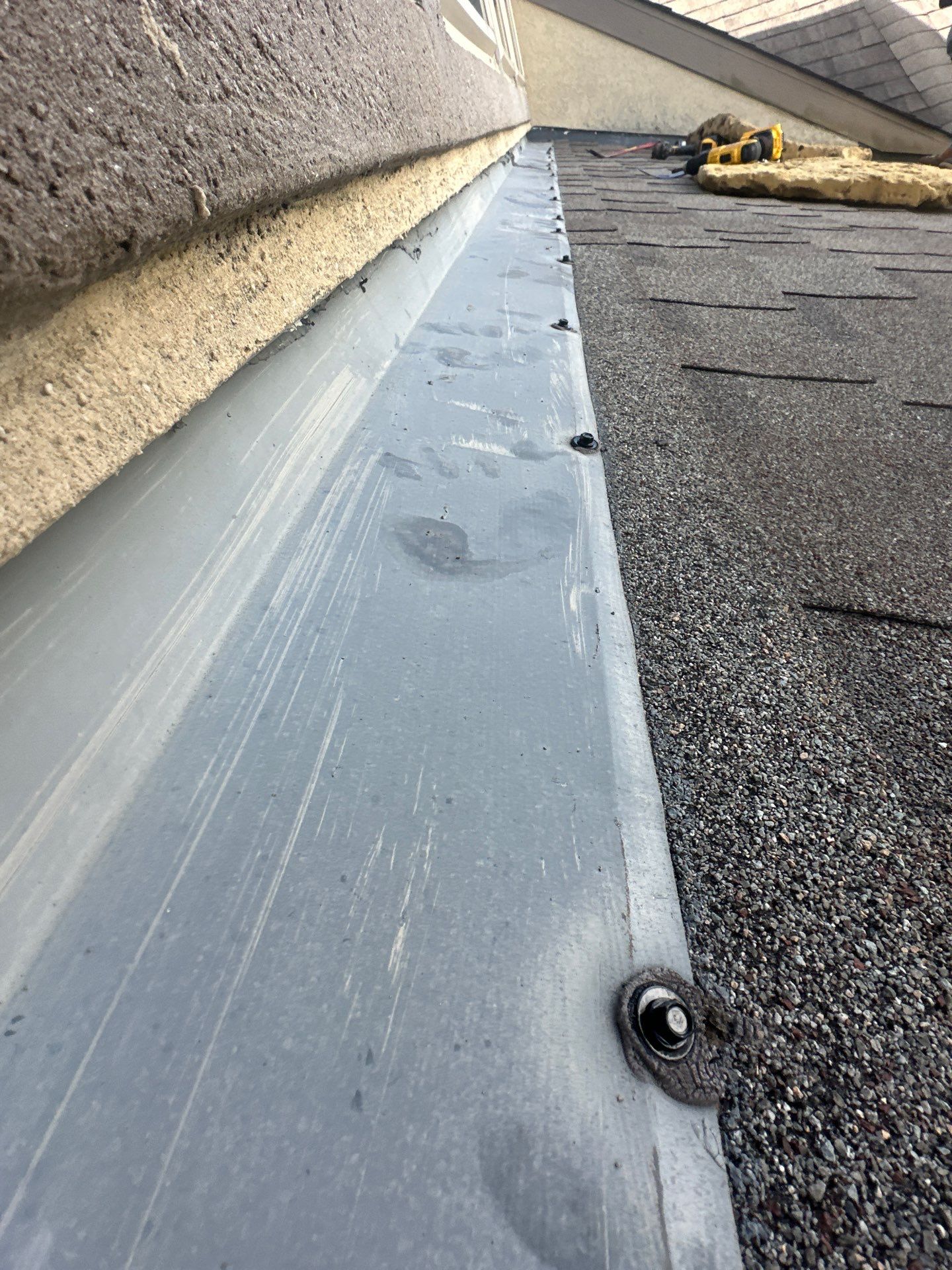
Flashing Type and Fasteners
Standard flashings nailed in place back out over time from thermal cycling. RCC uses EPDM rubber-gasketed flashings at all penetrations and transitions, secured with screws and washers. The gasket creates a compression seal. The screw doesn’t back out. It’s a more expensive installation — and it’s the installation that holds through Houston’s temperature swings. See the difference for yourself. Schedule an inspection here.